
Patreon
PatreonEntertainment
4.822.38K Reviews
- Version
- 126.35.0.16
- Installs
- 10.00M
- Age Rating
- Teen
Screenshots
Our Review of Patreon
 Analysis by Appyee
Patreon makes the most sense when I treat it as a direct line to the creators I already care about, rather than as another general entertainment feed. The Android app, developed by Patreon, brings paid and free creator communities into one place, with the main value coming from the ability to follow a particular person or project closely. That focus is what separates it from broad social networks, video platforms, and podcast apps where creator updates can easily disappear among recommendations.
I tested it with that question in mind: does it genuinely improve the experience of supporting a creator, or does it simply move familiar posts into another app? My answer is mixed but positive. When a creator uses Patreon consistently, the app gives their work a calmer home and makes supporter-only material easier to find. When a creator posts irregularly or spreads content across several services, the experience feels less essential.
Patreon’s real strength is a focused creator relationship
The capability that matters most here is membership-based access to creator communities and content. Instead of following a wide public timeline, I choose the creators I want to support and see the posts, updates, discussions, and media they make available to their members. That changes the purpose of the app: I am not opening it to discover whatever an algorithm happens to recommend. I am opening it to check in on specific creative work.
That distinction is especially useful for people who support several independent creators. A public platform may show a new video or post, but it rarely gives the same sense of an organized membership space. Patreon can bring those relationships together, while each creator still controls what they publish and how they communicate with supporters. The result depends heavily on the creator, but the structure is clear.
I also like that the app is free to install. The important financial decision is not the download itself; it is whether an individual creator’s membership is worth joining. That makes Patreon easy to try without committing immediately, although users should still read each creator’s membership details carefully before subscribing. Different creators can offer very different experiences, and the app should not be judged as though every page follows one standard format.
The audience is broad, but the app is marked for teens, so it is not positioned as a children’s entertainment space. I would still encourage younger users to understand what they are joining and to involve a parent or guardian when paid memberships are involved. The app’s purpose is simple enough, but creator communities can vary in tone, subject, and posting habits.
What I noticed while moving through the app
The most useful mental model is to think of Patreon as a collection of small creator hubs. Each hub has its own rhythm. One creator may use posts for regular updates, another may emphasize audio or video, and another may treat the community as the main benefit. I found that the app feels strongest when I enter with a clear reason: checking a particular update, reading a member discussion, or catching up with a creator I support.
That is also why the app can feel quieter than a conventional social network. There is less pressure to keep scrolling, and that is a benefit for me. I can spend a few minutes catching up instead of being pulled into an endless stream. However, anyone who expects a constant flood of entertainment may find the slower pace underwhelming.
Patreon has been available since October 22, 2015, and its maturity shows in the basic idea. It is not trying to replace every entertainment service. Its purpose is narrower: help creators build a direct membership relationship with their audience. In my experience, that narrow purpose is more valuable than a long list of loosely connected features.
How membership works in everyday use
Using Patreon begins with finding creators and deciding which relationships deserve regular attention. Once I follow or support someone, the app becomes more personal. My home experience is shaped by those choices rather than by a general catalog of unrelated entertainment. This makes the first setup important: if I join too many communities at once, the app can become another crowded inbox.
My practical advice is to start with one or two creators. I can then see how often they post, whether their updates are easy to follow, and whether the membership actually adds something beyond their public work. This trial period is more informative than judging a creator’s page from a single announcement. Some memberships are best for frequent behind-the-scenes interaction; others are more like a library of bonus material that I visit occasionally.
Notifications deserve attention too. If I leave every alert enabled, a busy creator can make the app feel noisy. If I disable everything, I may miss the reason I joined. I prefer keeping notifications for creators whose updates are time-sensitive and checking the others manually. That small adjustment makes Patreon feel intentional instead of demanding.
Another useful workflow is to separate “support” from “consumption.” I might join because I want to help a creator continue working, even if I do not read every post. That is perfectly reasonable, but it prevents disappointment. A membership is not automatically good value because it contains a lot of material; its value may be the direct support itself, the community, or occasional access to work I would not otherwise see.
For someone who mainly wants videos, a dedicated video platform may be faster and more familiar. For someone who mainly wants podcasts, a podcast player may offer better listening tools. Patreon becomes more compelling when the creator combines formats or uses posts and community interaction as part of the experience. The app’s advantage is the relationship layer, not necessarily the most advanced playback experience in every media category.
A realistic evening with the app
Imagine I support an illustrator whose public posts show finished artwork, while their member space contains sketches, progress notes, and conversations about technique. After work, I open Patreon to check the latest update. I read the short post, look through the attached work, and scan comments from other supporters. I am not searching the entire internet, and I am not waiting for a recommendation engine to surface the update. The app gives me a direct place to return to.
That scenario shows the capability’s real effect: it reduces the distance between creator and supporter. The experience feels more deliberate than liking a public post and moving on. At the same time, it only works if the illustrator maintains the space. If updates arrive rarely or the material feels too similar to what is already public, the membership loses its practical appeal.
For families, students, or anyone managing a tight budget, I would make a simple monthly review part of the routine. Check which memberships are still being used and whether each one has a clear reason to remain active. Because Patreon gathers several creator relationships in one app, it can be easy to forget a membership that no longer fits your interests.
Where the app compares well with familiar alternatives
Compared with a general social network, Patreon is more focused and less dependent on public reach. A creator’s update is connected to a membership community rather than competing with every account I follow. Compared with a video or podcast platform, it offers a broader creator-support context, but it may not match those services for discovery, playback, or catalog depth.
Compared with sending money through a donation service, Patreon gives the relationship an ongoing home. I can return to a creator’s posts and community instead of making a one-time gesture and leaving. That is a meaningful difference for supporters who want continuity. It is less useful for people who only want to make occasional donations without following content or participating in a community.
The app’s store summary, “Where your thing is a thing,” captures the intended feeling better than a technical description would: creators can make a dedicated place for the work that matters to their audience. I would not read that as a promise that every creator page will be equally active. The platform provides the framework; the quality of the experience is still creator-led.
Tradeoffs I would consider before joining
The biggest limitation is inconsistency. Patreon is not one uniform publication with a predictable schedule. Each creator decides what to share, how often to post, and what supporters receive. That flexibility is part of the appeal, but it also means I cannot assume that a membership will deliver the same level of activity as another one.
There is also a discovery tradeoff. The app is excellent once I know whom I want to support, but it is not my first choice for broad entertainment discovery. If I want to browse thousands of videos, albums, or podcasts and let recommendations guide me, another service is likely more convenient. Patreon rewards intentional choices rather than passive browsing.
Cost requires similar care. The app itself is free, but memberships can add up, and the practical value varies from creator to creator. I would never join several memberships simply because each individual one looks inexpensive. I would first identify the specific benefit I expect: access to posts, a community, bonus material, or the satisfaction of supporting the work. If I cannot name that benefit, I probably should not subscribe.
Organization can become a friction point when I follow many creators with different posting styles. A stream of updates is convenient, but it may not replace a personal system for remembering what I have read or what I want to revisit. I found it more manageable when I treated the app as a regular check-in rather than trying to consume everything immediately.
Another tradeoff involves expectations around communication. A membership community can feel more personal than a public feed, but that does not mean every creator can answer every comment or message. I would join for access to the shared space and the creator’s published work, not with the assumption of a private conversation. That expectation makes the experience more satisfying and fairer to the creator.
Performance and compatibility are also worth checking before installing. The current version is 126.35.0.16 and requires Android 8.0 or later. On a compatible phone, the app is a straightforward way to manage creator memberships, but anyone using an older device may need to rely on another way of accessing the service. I would also keep the app updated, especially if a creator’s content depends on newer media or interface improvements.
Who should skip Patreon
I would skip it if I do not already have creators I genuinely want to support. Without that personal connection, the app may feel like an extra destination rather than a useful entertainment tool. I would also choose a conventional streaming or social app if my priority is unlimited discovery, polished playback, or a single large catalog.
It may not suit people who dislike recurring commitments. Even when the amount seems manageable, several memberships can become difficult to track. Users who prefer one-time purchases may be happier buying individual digital products directly when that option exists.
Finally, I would hesitate if I expect every membership to contain frequent exclusive releases. Patreon is better understood as a flexible creator-support platform than as a guaranteed schedule of premium entertainment. The right question is not “How much content will I get every week?” but “Does this creator’s way of working make membership worthwhile for me?”
Who gains the most from the experience
Patreon is at its best for committed fans who want a closer, more organized connection with independent creators. That includes people who follow artists, educators, commentators, performers, and other creative personalities whose work benefits from direct community support. The app is especially useful when public posts are only part of the creator’s output and the member space adds context, conversation, or access.
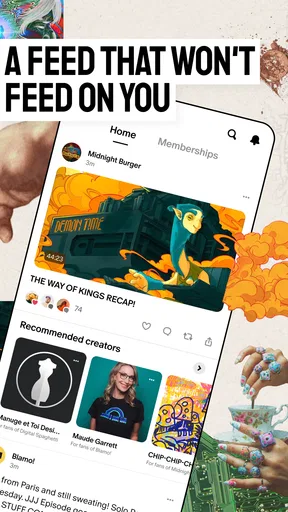
It can also help supporters who are tired of algorithmic feeds. I appreciate being able to open an app with a specific purpose instead of surrendering my attention to an endless sequence of unrelated clips. The experience is not completely free of distraction, but the membership structure gives me more control over why I am there.
Creators’ most dedicated audiences will probably get more from Patreon than casual viewers. A casual viewer may not notice the difference between a public update and a member post. A committed supporter is more likely to value continuity, community, and the ability to follow a project over time. That is the audience I would recommend it to first.
The scale of the service suggests that this model has broad appeal: Patreon has passed 10 million installs, carries an average rating of 4.8, and has accumulated around 295 thousand ratings. Those figures do not replace personal judgment, but they do match my impression that the app serves a clear need for a large group of fans and creators.
My final view is that Patreon is not a universal entertainment replacement, and it should not be approached that way. It is a focused tool for turning support into an ongoing relationship. I would recommend the free app to anyone who already has a few creators in mind and wants a more direct way to keep up with them. I would be more cautious for people looking only for cheap, unlimited content or effortless discovery.
The best reason to use Patreon is not the number of posts waiting inside it; it is the sense that your attention and support reach a creator more directly. When that is what I want, the app feels purposeful and worthwhile. When I only want something to watch or listen to, I would choose a more specialized alternative.
Verdict
Strengths of Patreon
- Supports exclusive content from creators you already follow.
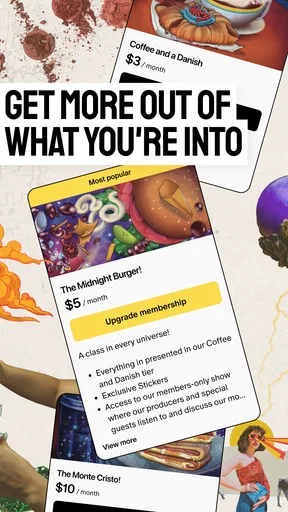
- Offers multiple membership tiers for different budgets.
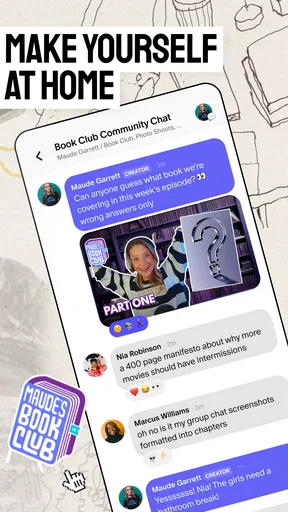
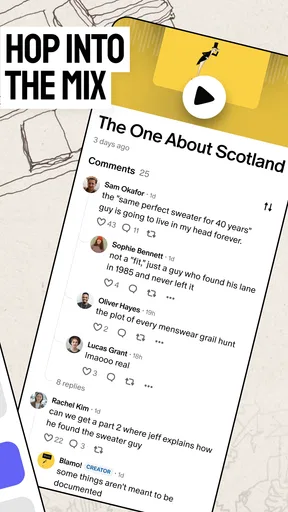
- Includes community posts, chats, and member-only updates.
- Works across Android, iOS, and the web.
- Lets you manage memberships and payments in one place.
Limitations of Patreon
- Subscription costs can add up when supporting several creators.
- Content quality and posting frequency vary between creators.
- Some benefits may require higher-priced membership tiers.
- Refund and cancellation policies can differ by creator.
- The app may send frequent notifications for new activity.
Similar Picks in This Category
View All
Google Play Games
Google LLC3.9

Netflix
Netflix, Inc.4.8

YouTube Kids
Google LLC4.2

Disney+
Disney4.4

Prime Video
Amazon Mobile LLC4.7

Steam
Valve Corporation3.2
Frequently Asked Questions
What is Patreon and how does it work?
Patreon is a membership platform that lets fans financially support creators such as artists, musicians, writers, podcasters, video producers, and educators. After joining a creator’s page, you select a membership tier and pay according to its terms. In return, you may receive exclusive posts, videos, downloads, livestreams, community access, or other benefits chosen by that creator.
Is Patreon free to download and use?
The Patreon app is generally free to download, and creating an account does not usually require a subscription by itself. However, many creator posts and benefits are available only to paying members. Subscription prices vary between creators and tiers, and some creators may offer free public content. Always review the selected tier, billing frequency, taxes, and renewal details before confirming payment.
How does billing work on Patreon?
Billing depends on the creator’s payment setup and membership terms. Some memberships charge when you join, while others follow a monthly or annual schedule. Your subscription may renew automatically until you cancel it. Patreon displays the applicable price before payment, but taxes, currency conversion, and payment-provider charges can affect the final amount. Check your account billing page for exact dates and charges.
Can I cancel a Patreon membership and request a refund?
You can usually cancel a membership through your Patreon account settings, but cancellation may stop future renewals rather than automatically refunding a payment that has already been processed. Refund eligibility can depend on the creator’s policy, the charge date, and Patreon’s terms. Before subscribing, read the membership conditions carefully, and contact Patreon support or the creator if a billing issue occurs.
What kind of content and features are available in the Patreon app?
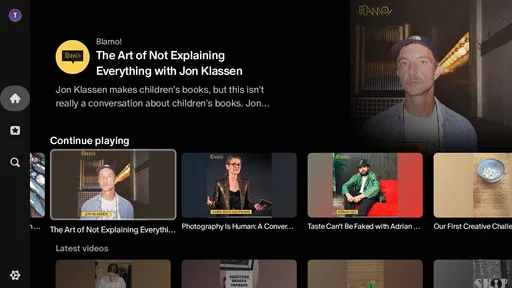
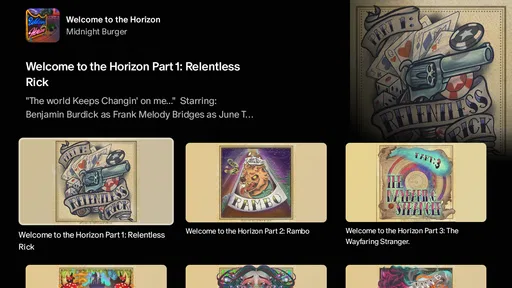
The available content depends entirely on the creators you follow. In the app, you may find exclusive articles, audio, videos, images, podcasts, livestreams, downloadable files, polls, comments, and member communities. Some creators also provide Discord or other external benefits. Content quality, posting frequency, moderation, and tier rewards vary considerably, so review each creator’s description before joining.
